How Farmers Apply Pesticides in Four Steps

We recently asked the question: What would you do if you drove by a field and saw a farmer spraying pesticides? If you missed it and want to know more, read this. We hope you give the farmer a friendly wave as you drive by. They have your family’s safety in mind.
Today, we go behind the scenes to learn about pesticide application on the Casper family farm near Lake Preston. There’s a lot that goes into making sure crop protection products are applied in an effective and safe way before they even get to the field.
Let’s take a look:
Step 1: Put Safety First

Safety comes first for Paul Casper and his family who grow about 4,500 acres of soybeans and corn near four South Dakota lakes. “We take spraying more seriously than planting and harvesting,” he said. “It’s about being a good neighbor, making sure our children and grandchildren are safe, and growing healthy food we can all feel good about eating.”
Being safe includes having the right certification to apply pesticides, using protective gear when handling and spraying products, and knowing the right amount and time to apply. Paul’s sprayer even has a cab shield so his granddaughter, Madi, can ride along with her dad, Drew, in the field.
According to Paul, many of the products and safety practices he uses are no different than avid gardeners, just on a larger scale. In fact, Paul’s wife, Korlyn, is a gardener who uses some of the same pesticides to protect her plants.
“We get bugs on our tomatoes and potatoes. If we didn’t use pesticides, our fruits and vegetables would be eaten up,” explained Paul. The whole family enjoys grabbing healthy snacks fresh from the garden. They just wash them first to eliminate any dirt, microbes and pesticide residues.
Step 2: Identify the Pest and Solution

The Caspers may be certified to apply all types of pesticides on their crops, but just because they can, doesn’t mean they do. First, Paul and Drew employ crop rotation, minimal tillage and use GMO seeds to try to prevent problems before they start.
“I’d rather treat a specific problem and take care of it early instead of applying pesticides to growing crops in the middle of the summer. GMOs help us be more precise and efficient with crop protection products and still grow healthy plants,” said Paul. Scouting fields regularly also helps them identify and deal with issues early.
This year, a weed known as marestail invaded their crops. Paul and Drew had to act fast to control it and talked with their crop consultant about solutions. He helped them identify the weed and recommended a contact herbicide that absorbs quickly to maximize application safety, but before they can apply it, they have to wait for the right weather conditions.
Step 3: Wait for the Right Weather

The ideal day to spray pesticides is dry and warm with wind speeds less than 15 miles per hour and no rain in the immediate forecast. Humidity should be between 50 and 60 percent and outside temperature no greater than 90 degrees. This helps keep the spray from staying in the air and drifting into different areas.
If the weather conditions aren’t right, Paul and Drew wait for another day to spray. “It’s just not worth taking a chance,” Paul said.
Step 4: Mix With Water and Apply

Once all the conditions are right, it’s time to transport the bulk pesticide product to the farm, mix it with water in tanks and pump it into the sprayer. Then they head out to the field to apply.
For the marestail herbicide, Paul and Drew combine approximately 18 gallons of herbicide with 1,000 gallons of water and a special soy-based product that helps the pesticide adhere to plant leaves and absorb better and faster. This mixture protects approximately 70 acres of crops. That may sound like a lot, but it turns out the actual amount of pesticide applied to an acre of land might be much less than you think.
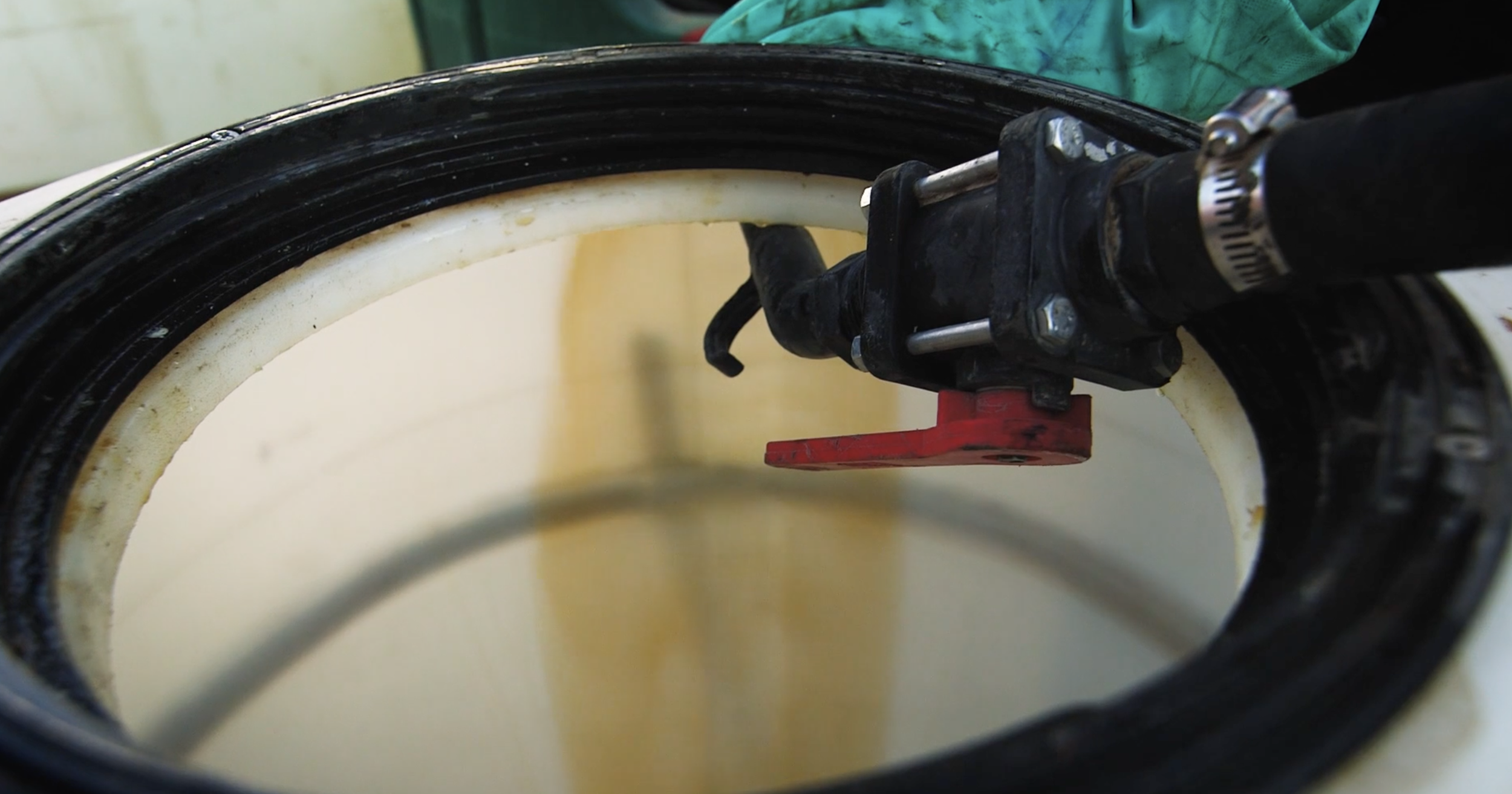
“It’s about the size of a medium latte spread over an area the size of a football field. Most of what you see being sprayed on the field is water,” explained Paul. The water truck stays with the sprayer and can cover 500 acres per fill.
According to Paul, the sprayer is the best piece of equipment they own. Not only does it have safety features that protect his family, it’s also equipped with precision technology to protect the families who live around his farm. We’ll take closer look at it in our next blog.
Frequently Asked Questions
Why do farmers use pesticides?
Farmers use pesticides to protect crops from weeds, insects, and diseases that can reduce yields or damage food. When used according to label directions, pesticides help farmers grow healthy crops while minimizing crop loss and making efficient use of land and resources.
Are pesticides safe to use?
Before a pesticide can be used in the United States, it must undergo extensive testing and be reviewed by the U.S. Environmental Protection Agency (EPA). Farmers who apply pesticides are trained to follow strict label instructions, wear protective equipment, and use products responsibly to protect people, wildlife, and the environment.
Do farmers need special training to apply pesticides?
Yes. Many pesticides require applicators to become certified through state-approved training programs. Certified applicators learn how to safely mix, handle, apply, and store pesticides while following federal and state regulations.
How do farmers know when to spray pesticides?
Farmers don't spray on a fixed schedule. Instead, they regularly scout their fields to identify pests and determine whether treatment is necessary. Weather conditions, crop stage, and recommendations from crop consultants also help determine the safest and most effective time to apply pesticides.
Why does weather matter when spraying pesticides?
Weather plays a major role in safe pesticide application. Wind, rain, humidity, and temperature can all affect how a product performs. Farmers wait for appropriate conditions to help keep the product on the intended crop and reduce the potential for spray drift.
What is spray drift?
Spray drift occurs when pesticide droplets move away from the intended target during application. Farmers reduce the risk of drift by monitoring weather conditions, using specialized spray equipment, selecting the correct nozzle types, and following application guidelines.
How much pesticide is actually applied to a field?
The amount of active pesticide applied is often much smaller than people expect. Most of what comes out of a sprayer is water, which helps evenly distribute the product across the field. Depending on the product being used, the amount of pesticide applied per acre can be relatively small.
Do home gardeners use pesticides too?
Yes. Many products used by commercial farmers are similar to those available for home gardens, although the application equipment and scale are different. Home gardeners also follow product labels to help protect their plants from insects, weeds, and diseases.
Are fruits and vegetables safe to eat after pesticides are used?
Yes. Farmers follow strict application instructions and required waiting periods before crops are harvested. In addition, washing fruits and vegetables under running water before eating helps remove dirt and surface residues as part of normal food preparation.
What do farmers do before deciding to use pesticides?
Many farmers first use practices such as crop rotation, selecting pest-resistant crop varieties, scouting fields, and other integrated pest management (IPM) strategies to help prevent problems. Pesticides are one of many tools farmers can use when needed to protect crop health.