From Field to Freight: The Journey of South Dakota Soybean
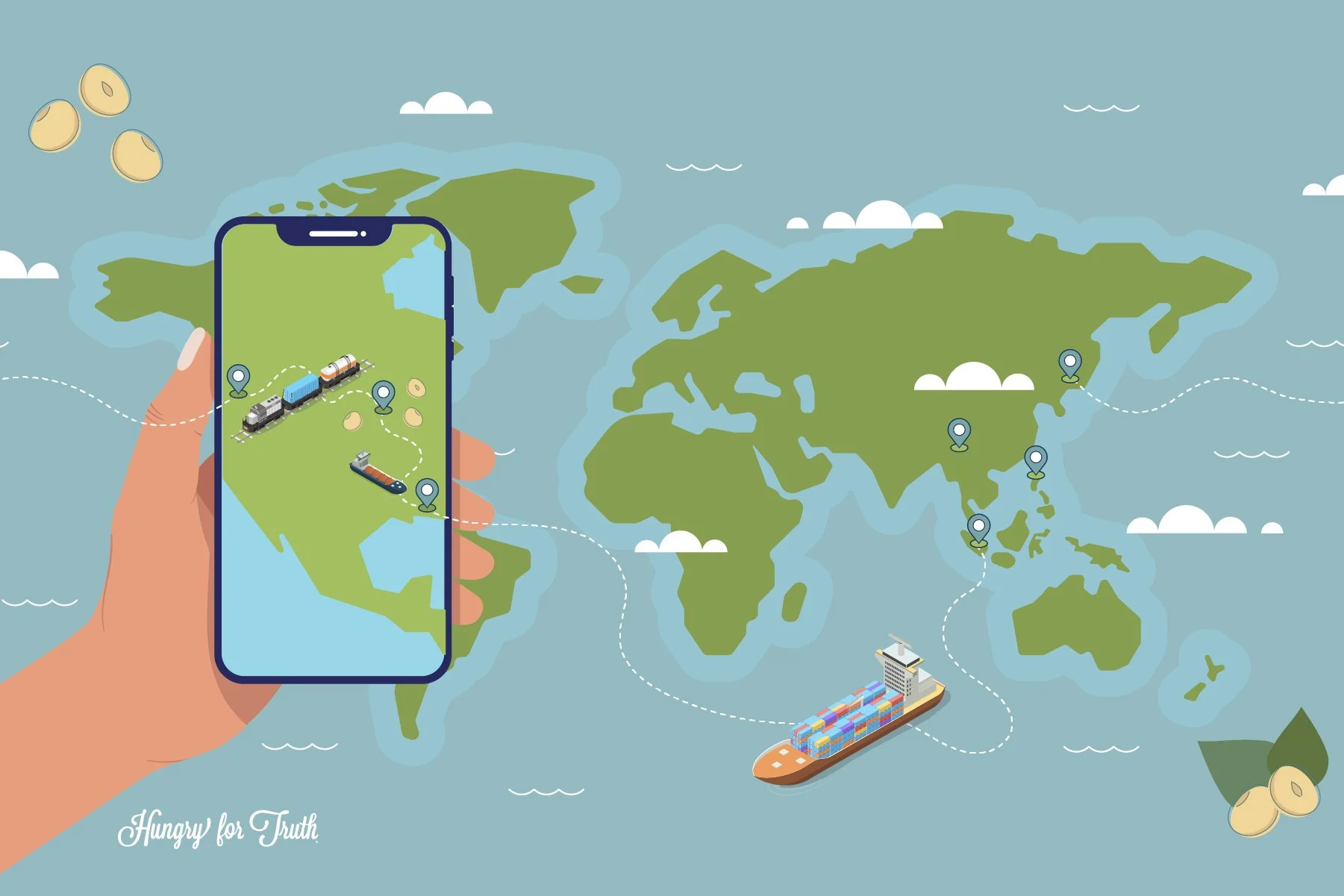
Harvest may be complete, but for South Dakota soybeans, the journey is just beginning. After leaving the field, beans travel by truck, rail, barge, and ocean vessel to reach markets across the U.S. and around the world. We checked in with Mike Steenhoek, Executive Director of the Soy Transportation Coalition, to learn about the transportation system that keeps farmers connected to global markets.
A Complex Journey
What are some of the key transportation and infrastructure issues affecting soybean transportation?
“Having quality rural roads and bridges, cost-effective and reliable rail service, well-maintained and improved locks and dams, and well-capitalized ports are some of the key areas of emphasis that would benefit the transportation and infrastructure of the crop’s transportation.”
Efficient infrastructure ensures that soybeans can move from South Dakota fields to elevators, processors, and export terminals quickly and cost-effectively. For more on the systems supporting soy, check out our Facts & FAQs page.

What impact do transportation issues have on soybean farmers and their profitability and competitiveness?
“It’s not enough to just grow a crop or have demand for the crop. We need cost-effective, reliable transportation that can connect supply and demand. Without transportation, farmers won’t be profitable.”
Reliable transportation is essential to keeping South Dakota farmers competitive and ensuring that their crops reach domestic and international markets.
What effect does soybean transportation have on the U.S. economy?
“Soybeans are a major contributor to the U.S. economy and often the #1 agricultural export, playing a significant role in the U.S. economy.”
From jobs in rural communities to global trade, soybean transportation impacts much more than just farmers—it supports the broader economy.
What are some obstacles to efficiently transporting soybeans, and what external factors can affect the process?
“Some of the obstacles that we face are that much of our infrastructure needs to be enhanced, and funding can often be limited. There are also challenges amongst the modes of transportation and weather-related events (hurricanes in the Gulf, for example) that can play a factor in efficiency.”
Weather, aging infrastructure, and limited funding for upgrades all influence how efficiently soybeans move from field to consumer.
What impact does insufficient transportation have on U.S. agriculture?
“Farmers won’t be profitable without cost-effective, reliable transportation.”
When bottlenecks occur, costs rise, and U.S. farmers face challenges competing in global markets.
How long does it take to move soybeans from the Midwest to export destinations?
“Farmers may deliver their soybeans via truck to a local elevator, processor, barge, or rail-loading facility, which can be 10 miles, 45 miles, or longer, depending on what region they are located in the country.”
“For example, a journey via train from the Midwest to the Pacific Northwest will take approximately five days. A journey via barge from the Midwest to the Mississippi Gulf region will take 2–3 weeks. An ocean vessel from the Pacific Northwest to Asia will take 15–18 days. An ocean vessel from the Mississippi Gulf to Asia will take 30 days.”
What are some of the top destinations for soybean exports?
China
Mexico
Egypt
The Netherlands
Japan
Indonesia
South Dakota farmers rely on these export markets to sell a significant portion of their crop each year.
How would new soybean-crushing plants impact farmers and businesses in the future?
“There would be a greater opportunity to export more soybean meal and oil if new soybean crushing plants are implemented throughout the country.”
Adding domestic processing capacity would not only benefit farmers but also create more value-added products for U.S. and global markets.

Closing the Loop
From field to freight, soybeans grown right here in South Dakota fuel a global network of food, feed, and renewable products. The journey doesn’t stop after harvest, it’s just shifting gears.
Want to keep learning?
Explore more about soy uses, take a virtual farm tour, or check out more farmer stories to see how South Dakota agriculture connects to the world.